

Modern Methods of Temperature Control in Crystallization Processes
From food manufacturing to materials science to medicines, crystallization is a basic technique extensively used in many different fields. Optimizing crystal size, purity, and yield depends on exact control of temperature. Technological developments in recent years have greatly enhanced the capacity to control temperature in crystallization processes.
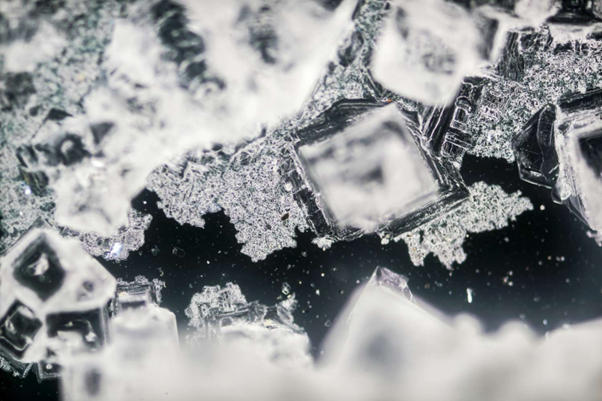
Find out how MIRAI Intex can revolutionise your crystallisation process. Their expertise includes advanced temperature control solutions, innovative crystallisation equipment and specialised systems to meet your unique needs. Visit their blog to learn more: Crystallization process. An overview of contemporary techniques and tools allowing exact temperature control and improved process efficiency is given in this paper.
Importance of Temperature Control in Crystallization
Temperature is a critical parameter in crystallization as it influences nucleation, crystal growth, and dissolution rates. Even minor deviations in temperature can lead to:
- Variability in crystal size: Non-uniform crystals arise from unequal nucleation and growth rates brought on by temperature swings.
- Product contaminants: Inappropriate temperature control may encourage the insertion of contaminants into the crystal lattice.
- Reduced yield: Less than ideal circumstances might prevent the solute from entirely transforming into a crystalline state.
Therefore, maintaining precise temperature control is vital for achieving desired crystal characteristics and ensuring process consistency.
Modern Technologies for Temperature Control
1. Digital Temperature Controllers
Digital temperature controllers are integral to modern crystallization setups. These devices offer real-time monitoring and adjustments, ensuring that the process remains within the desired parameters. Features include:
- By means of system behavior prediction and continual adjustment, PID (Proportional-Integral-Derivative) Control offers precise and steady temperature control.
- Advanced controllers may be linked with IoT systems, therefore enabling operators to remotely monitor and control the process.
2. RTDs—Resistance Temperature Detectors—and thermocouples
Usually used for exact temperature measurement are thermocouples and RTDs.
- Thermocouples' wide working range and quick reaction time make them perfect for high-temperature surroundings.
- Known for their precision and stability in gauging temperatures within the usual range of crystallization processes, RTDs.
3. Chillers and Heat Exchangers
Maintaining specific temperature ranges requires reliable cooling and heating systems. Chillers and heat exchangers are widely used:
- Chillers: Provide consistent cooling for systems that require precise temperature reductions.
- Heat Exchangers: Efficiently transfer heat between fluids to maintain the desired temperature gradient without direct mixing.
4. Automated Feedback Systems
Automated systems integrate sensors, controllers, and actuators to dynamically adjust temperature. These systems minimize human intervention and improve process reliability by responding to real-time data.
- Example: A crystallizer equipped with an automated feedback loop can adjust cooling rates based on monitored supersaturation levels, ensuring optimal crystal growth.
5. Advanced Software Solutions
Modern crystallization processes leverage sophisticated software for temperature modeling and control.
- Computational Fluid Dynamics (CFD): Simulates temperature distribution within the crystallizer, helping optimize system design.
- Process Analytical Technology (PAT): Monitors critical process parameters and ensures real-time adjustments to maintain optimal conditions.
Innovations in Equipment Design
1. Microfluidic Devices
Microfluidic crystallizers enable precise control of temperature and concentration in small volumes. These devices are particularly useful for:
- Studying crystallization kinetics.
- Producing high-quality crystals for pharmaceutical applications.
2. Jacketed Crystallizers
Jacketed crystallizers are designed with double-walled chambers for efficient heat exchange. These systems are commonly used in batch and continuous crystallization processes, offering:
- Uniform temperature distribution.
- Flexibility to handle various solvents and solutes.
3. Integrated Sensors
Modern crystallizers often include integrated temperature and pressure sensors, providing comprehensive data for process optimization.
Case Studies: Successful Implementation of Temperature Control
1. Pharmaceutical Industry
A leading pharmaceutical company used PID controllers and jacketed crystallizers to produce an active pharmaceutical ingredient (API). The precise temperature management resulted in:
- A 20% improvement in crystal purity.
- Reduced batch rejection rates.
2. Food Industry
In sugar production, advanced heat exchangers were implemented to stabilize the crystallization process. The outcome included:
- Consistent crystal size distribution.
- Enhanced energy efficiency.
Future Trends in Temperature Control
1. AI-Driven Systems
Artificial intelligence (AI) is set to revolutionize temperature control by predicting process outcomes and optimizing parameters automatically.
2. Green Technologies
Eco-friendly solutions, such as renewable energy-powered chillers, are gaining traction to reduce the environmental impact of industrial crystallization.
3. Miniaturized Sensors
The development of highly sensitive and compact sensors will further improve temperature monitoring accuracy.
Conclusion
Effective crystallizing techniques depend mostly on temperature control. Modern technologies have greatly improved the capacity to reach exact temperature control with their digital controls, sophisticated sensors, and creative equipment design. Industries may guarantee improved quality of products, more efficiency, and lower running costs by using these techniques. Future temperature control in crystallization presents even more opportunities as new ideas keep developing.